[vc_empty_space height="5px"]
By Giri Nathan
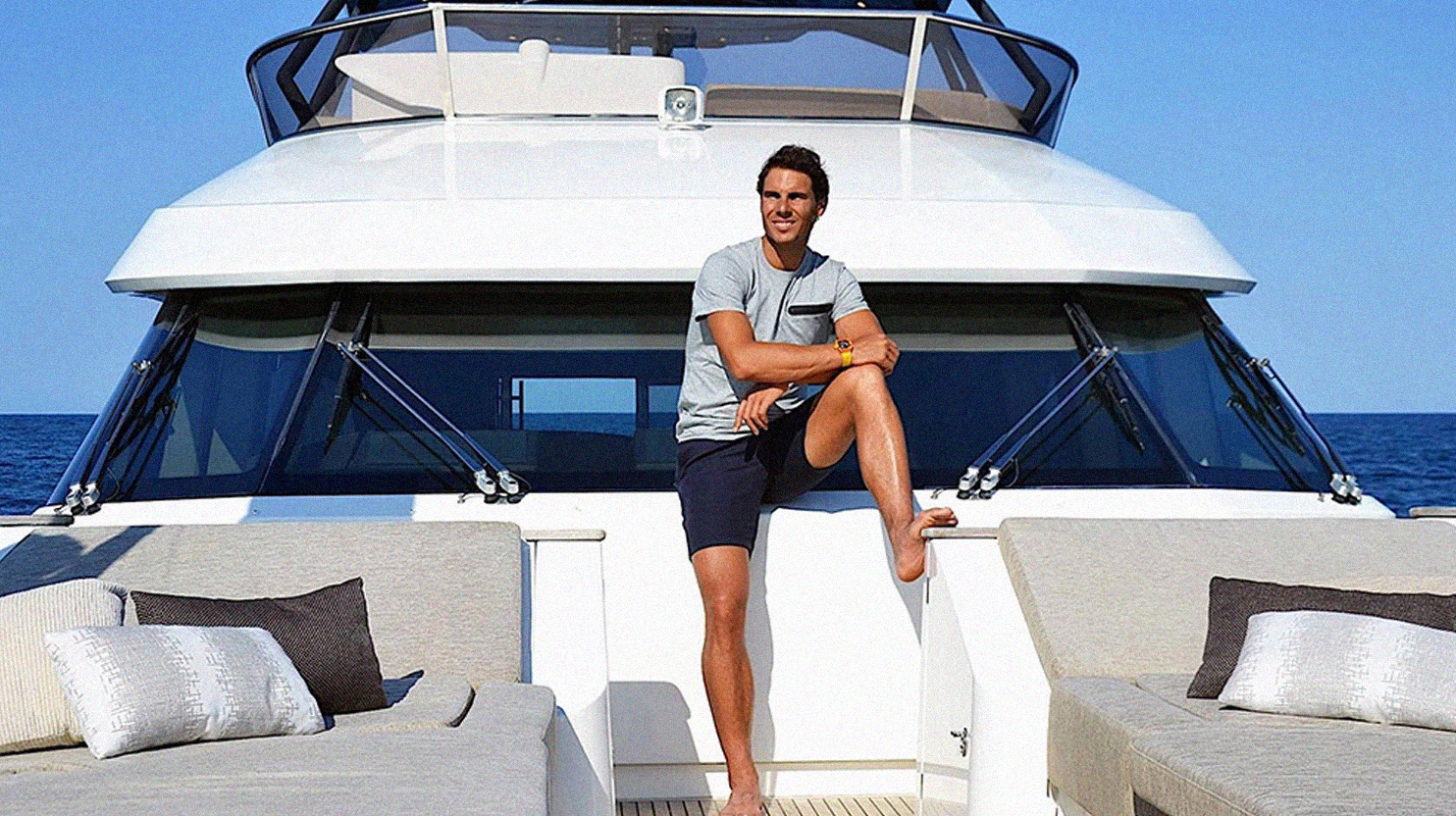
[vc_empty_space height="15px"]Rafael Nadal announced on Thursday that he will miss the most meaningful tournament in his career. (He also announced that he intends to retire at the end of the 2024 season, but I don’t have the space or the nerve to tackle that in this humble email.) For the past 18 years, there has been no Roland-Garros without Rafa. Fourteen times he has been there on Sunday to hoist the Coupe de Mousquetaires. Not this year. It’s a disappointment for anyone who likes to watch the rugged artistry of an evolving clay-court genius, or just the meticulous picking of wedgies and alignment of water bottles along a precise diagonal. It is also, however, an enormous opportunity for the other 127 players who will appear in the men’s singles draw. When the guy with a 97 percent win rate at the tournament will instead be chilling out on a boat in Mallorca, you have to seize the opportunity.
By default that opportunity would be seized by Novak Djokovic, the champ in 2016 and 2021, and the world No. 1 until the end of this week. But his clay season has been quiet heading into the main event. A loss to budding clay-court killer Lorenzo Musetti in Monte Carlo didn’t necessarily raise eyebrows. But a loss to his countryman Dusan Lajovic in Banja Luka the next week did. (Lajovic had won just four games total in their previous two matches.) Djokovic was not so sunny in the aftermath: “I didn’t feel well on the court. My legs were slow and my footwork was torpid; many missed shots, totally without direction.” He played those matches with a strapped-up right elbow. He skipped Madrid to recover. This week in Rome he looked physically subpar in his quarterfinal against Holger Rune, taking a painkiller during a changeover and losing to the 20-year-old in three sets on slow wet clay. After the match he remained justifiably confident: “I always like my chances in Grand Slams against anybody in best-of-five.” He has made a habit of winning majors with live injuries, so I take him at his word.
Still, with that context, the actual favorite is Carlos Alcaraz, who will return to No. 1 ranking next week and has thus far assembled an extremely Carlos Alcaraz 30–3 season. Titles in Barcelona and Madrid solidified his clay agenda. A third-round loss in Rome to the flamethrowing qualifier Fabian Maroszan shouldn’t take too much shine off of his dominant start to the year. Hauntingly, the 20-year-old Alcaraz looks even better than the 19-year-old Alcaraz, who already seemed like a manufacturing error, an affront to the idea that skills must be developed over time. His serve is bigger now. His backhand is more reliable. He is, somehow, even faster, able to ghost his way to the net right after desperate defensive digs. All that youthful flash and invention are still intact. At present Alcaraz is the most complete player in the men’s game, and after missing out on Australia with a leg injury, he has an opportunity to solidify that status with the first of his Roland-Garros titles: I wouldn’t bank on 14, but maybe I wouldn’t stop at five, either.
Alcaraz is not the only 20-year-old prodigy with a good look at the title. Holger Rune might be discovering in real time that clay is his optimal surface: an appearance in the Monte-Carlo final, a title in Munich, and a win over Djokovic in Rome. Rune embodies that total offense-defense hybrid that built the Nadal-Djokovic duopoly. He can morph his game as needed, drawing on one or the other of his talents, but during this recent stretch, it’s his patience that has stuck out. For all his tantrums between points, during the tennis proper, he is as stoic as they come. Clay rallies can sometimes assume the tenor of a staring contest, and Rune has that mental and physical resilience to stand on the baseline and batter heavy ball after ball without losing focus and going for too much too soon. There’s a deep maturity to Holger Rune’s tennis, if not (yet) Holger Rune. I would expect him to match last year’s quarterfinal appearance and, depending on how the draw shakes out, go deeper still.
To my knowledge, none of the above players have gone on the record slandering the crushed red brick that comprises a clay court. If Roland-Garros needs an interloper, it is Daniil Medvedev, who is realizing that perhaps he likes to “play in the dirt like a dog” after all. The self-described “hard-court specialist” is thriving now that he has leaned into the specificities of the surface. He said recently that he has been practicing his footwork for sliding on clay, and that the expanded two-week formats in Madrid and Rome have given him more time to get acclimated. Assuming he’s found his footing, there’s no reason his court coverage and rally tolerance wouldn’t pay off here. Medvedev has spent his lucrative prime scrambling around nine feet behind the baseline on hard courts. Why not bring that to clay, where you’re actually encouraged to do so?
Okay. Did I miss anyone? Stefanos Tsitsipas? Stefanos Tsitsipas is very good at tennis.[vc_empty_space height="10px"][vc_empty_space height="15px"]Above: Rafa's summer plans. (Monte Carlo Yachts)[vc_column width="1/6"][vc_tweetmeme share_via="racqetmagazine"][vc_column width="1/6"][vc_facebook type="button_count"][vc_column width="1/6"][vc_column width="1/6"][vc_column width="1/6"][vc_column width="1/6"][vc_empty_space height="45px"][vc_column width="1/4"][vc_column width="1/2"][vc_custom_heading text="Now Available" font_container="tag:h5|font_size:25px|text_align:center"][vc_custom_heading text="ISSUE NO. 22" font_container="tag:h5|font_size:45px|text_align:center"][vc_empty_space height="10px"]
[vc_btn title="BUY NOW" style="outline" shape="square" color="success" size="lg" align="center" button_block="true" link="url:https%3A%2F%2Fshop.racquetmag.com%2Fcollections%2Ffeatured-products%2Fproducts%2Fissue-no-22|title:SHOP||"][vc_column width="1/4"]