In the mid-1980s, when Pete Sampras was barely a teenager pounding away at the Jack Kramer Club, his coach was secretly building a case to convince the Sampras family that young Pete should ditch his two-handed backhand for a one hander. It was a tough sell. Sampras hadn’t really hit his growth spurt yet, and the backhand is what had helped him beat his contemporary junior rivals such as Michael Chang.
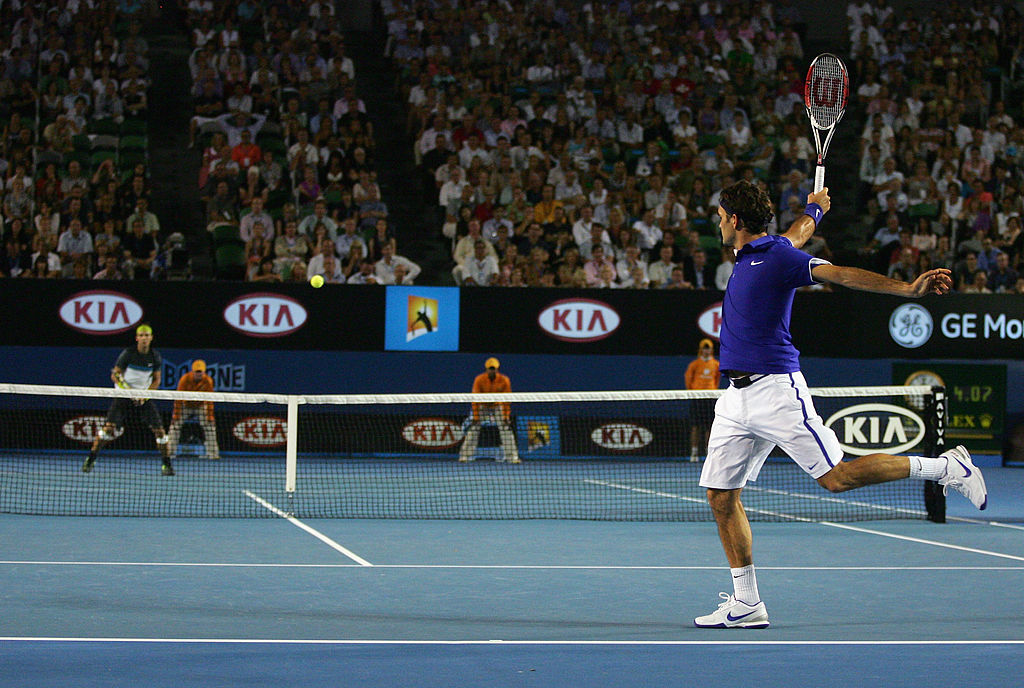
But his coach wasn’t concerned with the hard courts of Southern California; he was methodically plotting the future and how to mold Sampras into the next Rod Laver. "That meant winning Wimbledon, and that meant playing well on fast grass courts — something that, up to that point in tennis history, meant playing a one-handed backhand," Sampras wrote in his memoir, A Champion's Mind. It took some doing, but the one-hander became the future for Sampras — and the future of his successor, Roger Federer.
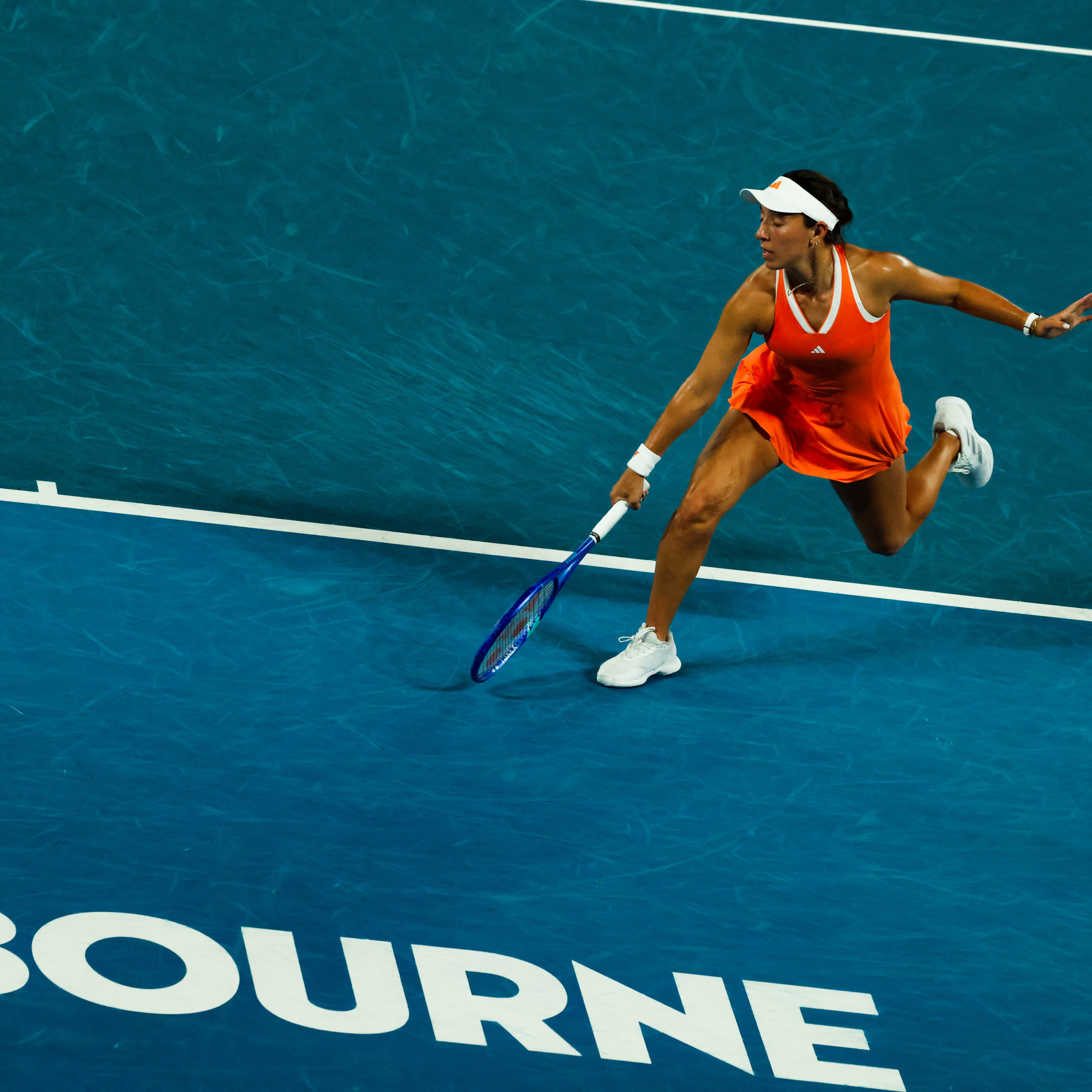
In 2024, that future is already here and it may be gone. For the past week, many in the tennis world have been mourning the death of the one-handed backhand: With Stefanos Tsitsipas dropping to number 11 in the ATP rankings, no man or woman with a single-handed backhand is currently inside the top 10 of the professional ranks for the first time since the beginning of the Open Era in 1968.
For all the eulogizing, there was a living lesson: Tsitsipas was in the top ten despite his choice of backhand, not because of it. Even as Tsitsipas provided truly marvelous moments with his backhand, on balance it has been an Achilles heel for the Greek. The relative weakness of the shot has forced him too far behind the baseline to be the relentlessly attacking player his natural athleticism affords him. Returning serve is only an asset if he can manage to hit a forehand. And his stubbornness in refusing to alleviate the pain with a competent slice is no help, either.
The demise of the one-handed backhand isn’t exactly news. The number of players in the top 50 with a one-handed backhand has been dwindling for decades — even more expeditiously on the women’s side. Increasingly, there is a feeling that maybe it’s no longer possible to rise to the top of the game without a two-handed backhand. Serves are too powerful, the tempo of the game is too fast to adequately stabilize in time, and hiding a weak backhand by hitting inside-out forehands doesn’t cut it at the most elite level these days.
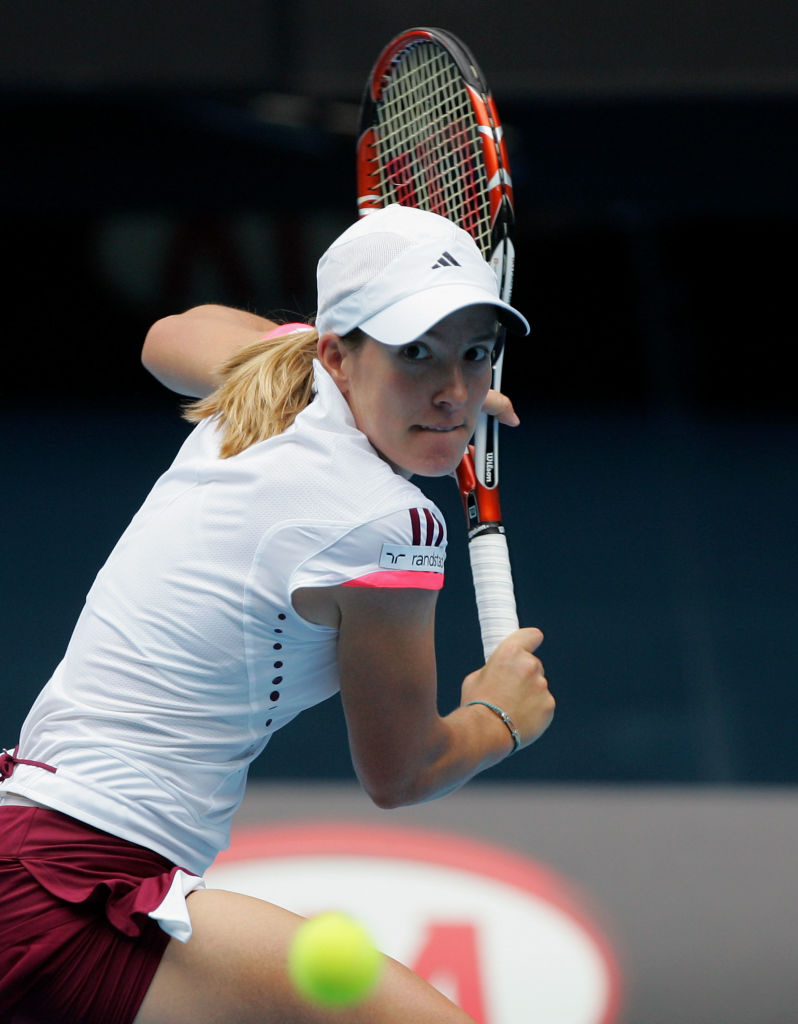
Even as that dynamic has unfolded, we’ve been treated to something incredibly special from those who went the single-fisted route. Spectators might marvel at an astonishing two-hander but they feel a beautiful one-handed backhand. In writing about Roger Federer, it’s what David Foster Wallace called kinetic beauty. It’s a quality that isn’t always describable, but it’s impossible to strike from memory. Who could forget the images of Gabriela Sabatini winding up that Prince Graphite and uncoiling with the tremendous power of her shoulder? And, with her eyes trained on the point of contact, you could see in the background another remnant of the one-hander: a second ball in her left hand, just in case she missed her first serve.
The very best of those who ever hit the one-hander marveled us with their variety — a matter of design and necessity. They could take it early and crack it flat like Justine Henin or Chris Eubanks. They could pull across the back of the ball for some corkscrew action like Boris Becker or Denis Shapovalov. They could load up topspin with such an angle, you’d swear Rafael Nadal had just pulled his opponent off the court and into the stands with a crosscourt forehand; instead, it was incredibly Stan Wawrinka or Richard Gasquet.
And they could hit devastating slices. Yes, it’s now commonplace for a two-hander to take one hand off to hit a slice. But not with these options: floaters that could either push an opponent back or dare them to go for a winner with their own pace, a Ken Rosewall-esque slice drive here and gone in milliseconds, a Steffi Graf-like slice around the outside of the ball that curved and skidded so much the recipient was digging a ditch more than they were hitting a backhand, a short slice to draw an opponent to net against their will, and the soft crosscourt chip to force a net-rusher to lunge forward as a set up for a passing shot (or a lob). And by far the most elegant slide on clay is sliding into a slice backhand.
Eulogizing in sports can be treacherous business. Done well and it can pay respects to a moment in time with romantic nostalgia. Done poorly and it comes off as bitterness that things didn’t remain how you preferred them. But there’s another risk: Being wrong. After all, Tsitsipas will likely reenter the top ten. Grigor Dimitrov, Federer’s aesthetic heir, is making a push to do the same. Lorenzo Musetti, Dan Evans, and Chris Eubanks — all in the top 50 — are there for backup. And with a serious dose of French flair, 21-year-old Diane Parry is rising with one hand on both sides.
Still, it may well take a full generation before the coaches who studied Federer’s entire career have a crop of players come up with devastating one-handed backhands. In fact, all it takes is one major breakthrough from a coach who convinces a player that their future is with a single hand on the grip to make us celebrate the shot’s life instead of mourning its death.
Allen McDuffee is a journalist and the creator of Court Theory