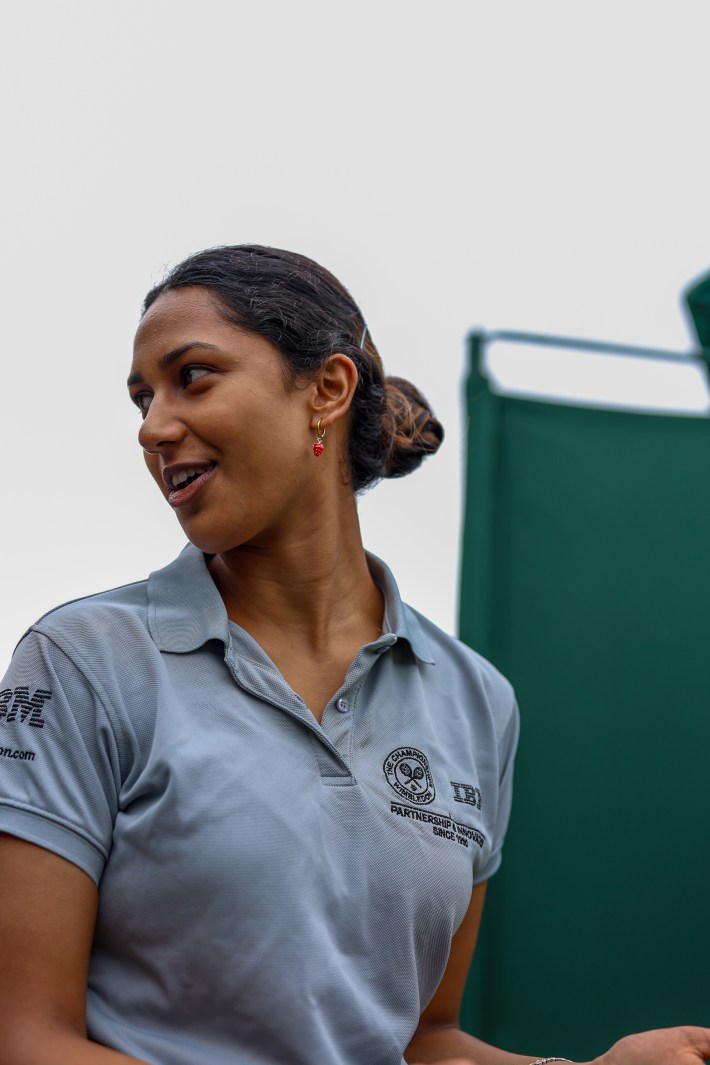
Chandani Rathnam, 21, and Lewis Cox, 26, follow the matches closer than anyone at Wimbledon or at home.
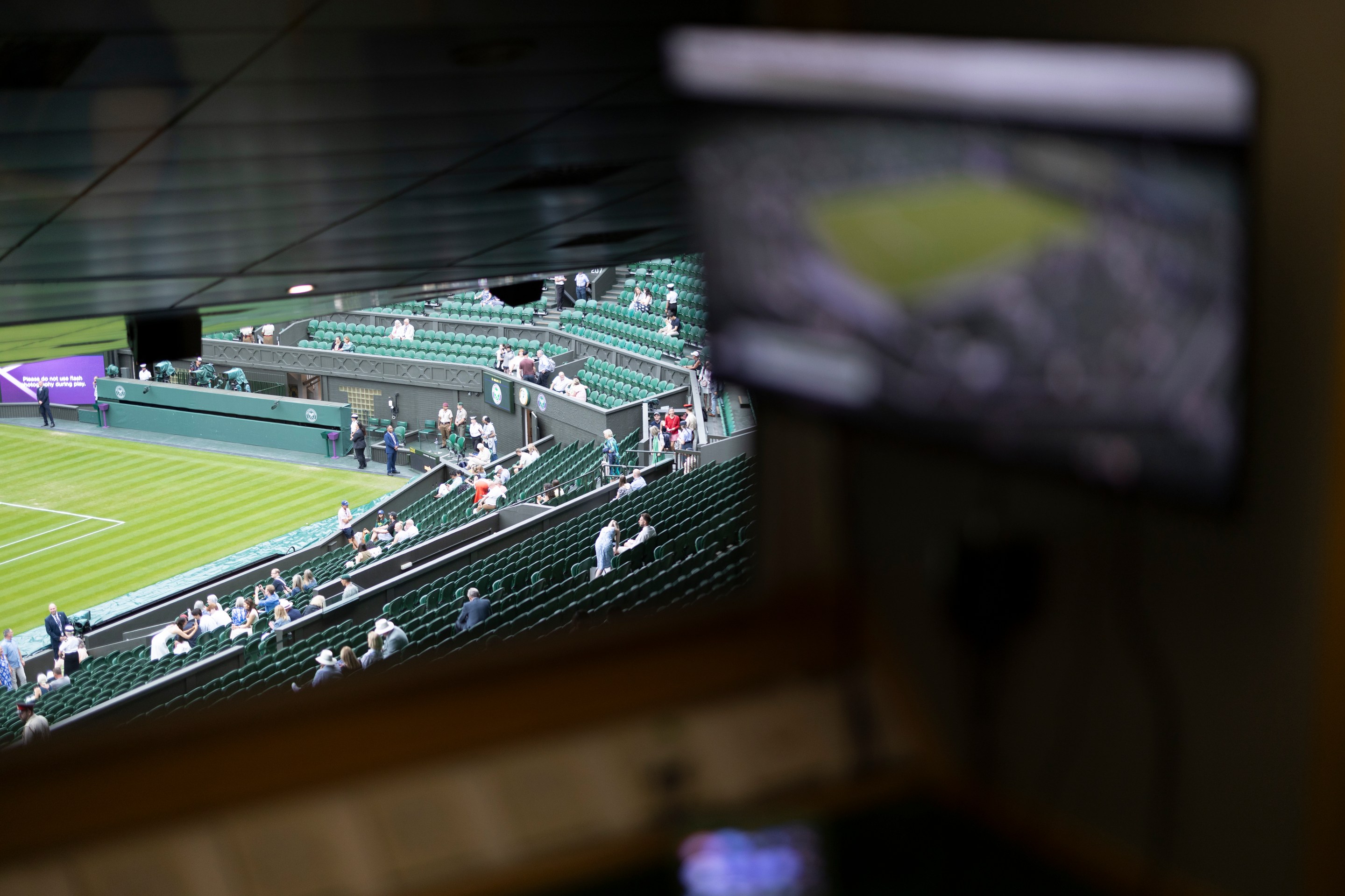
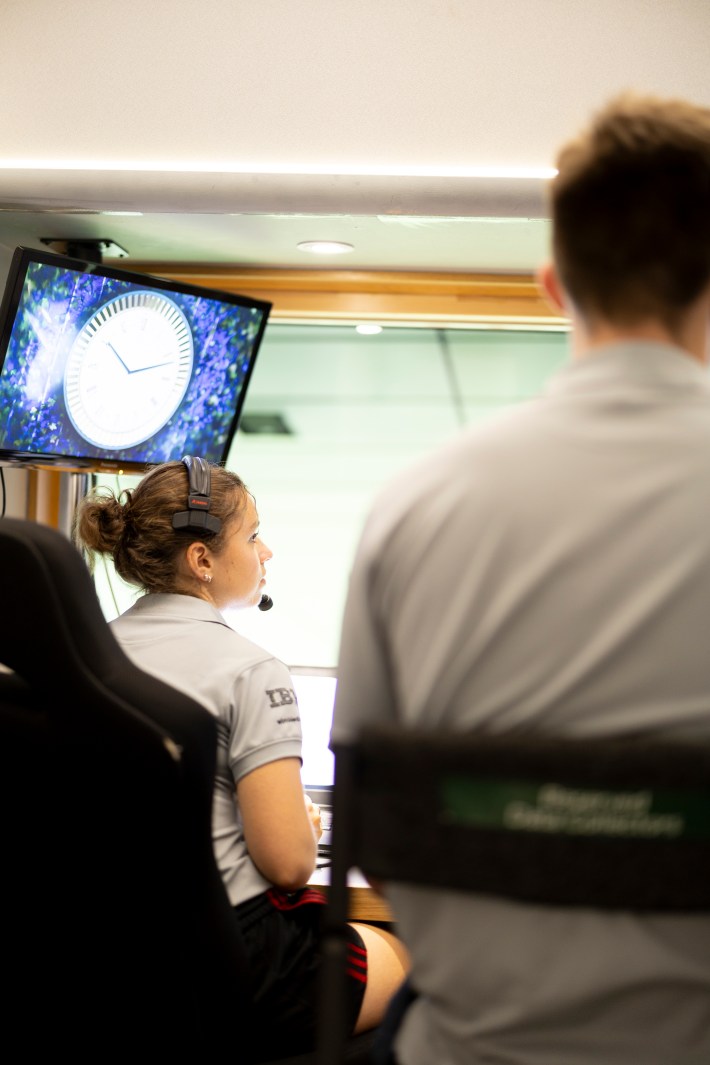
Alongside 50 other kids—young adults from 18-30, but we’ll call them kids—they’re all elite tennis players themselves, and they run the data input on every match for the entirety of Wimbledon and they’re all elite tennis players themselves. They read the game, point by point, and input aces, winners, rally count, and, of course, the ever-subjective forced and unforced errors. If you’re on the grounds you see them courtside on the outer courts with a tented computer in front of them. On the stadium courts, they’re tucked into a tiny attic-style room above the court, three of them elbow-to-elbow running the operation.
Naturally, the kids are all obsessed with tennis, and to get this gig you need to be damn good. All the kids have reached a national ranking in the UK with a minimum 3.1 LTA rating and preference given to recent playing experience. Translation: they could all play mid- to high-level college tennis in the US. Many of them have played junior Wimbledon. Some have played main draw Wimbledon over the years. One former data kid won Gentlemen’s Doubles last year (Henry Patten).

All the data fans and commentators lean on day in and out starts with these kids. Of course, there are layers of human and AI-powered checks to make sure the data is accurate, but these tennis-savvy workers are arguably the most important part of painting the data picture of the matches. “They’ve all been under pressure. They can feel and read the game. And they’re resilient,” said Helen Weal, AELTC Operations Manager for the club’s IBM partnership.
While working a match, Chandini and Lewis make fast, smart decision on the unforced error. Something many of us would debate for hours. In a grueling three- or five-set battle, sometimes ascertaining what makes an unforced error isn’t so clear.
“It’s a subjective thing, and that’s the most difficult part of the job,” said Lewis. You just have to stay consistent. Is there a real reason why they should miss the shot? Power, placement spin from an opponent?” Just like when they’re playing matches themselves, these young folks are enmeshed in the match alongside the players.
Of course, if a call on an ace or error isn’t clear, they call up the team and send it through the chain for a closer look in the IBM bunkers nearby for a final call. And play moves on.
Lewis has done this job for the last five years. This is Chandani’s second. Most the crew gets invited back. Newbies have to apply, pass tests, go through interviews and win out among a pool of over up to 300 candidates. When it’s time, this army of British grinders come from around the UK to take the job. They stay with friends or Airbnbs around London, and hop on the tube everyday to get to work.
Back home, Chandani plays singles on the Bristol University team and is studying for medical school. Lewis used to coach at the Nadal Academy in Mallorca, now he manages a store in his hometown.
No surprise, they’re the coolest, most fit looking group in the staff cafeteria where reporters, photographers, grounds crew, umpires, and other staff gather in their downtime of the fortnight. They’re all built like hardened tennis players—toned calves, sharp tan lines, Nadal Academy shorts. When they’re not on shift, they’re hanging out all together at the longest table in the room scrolling tennis highlights on TikTok and Instagram.
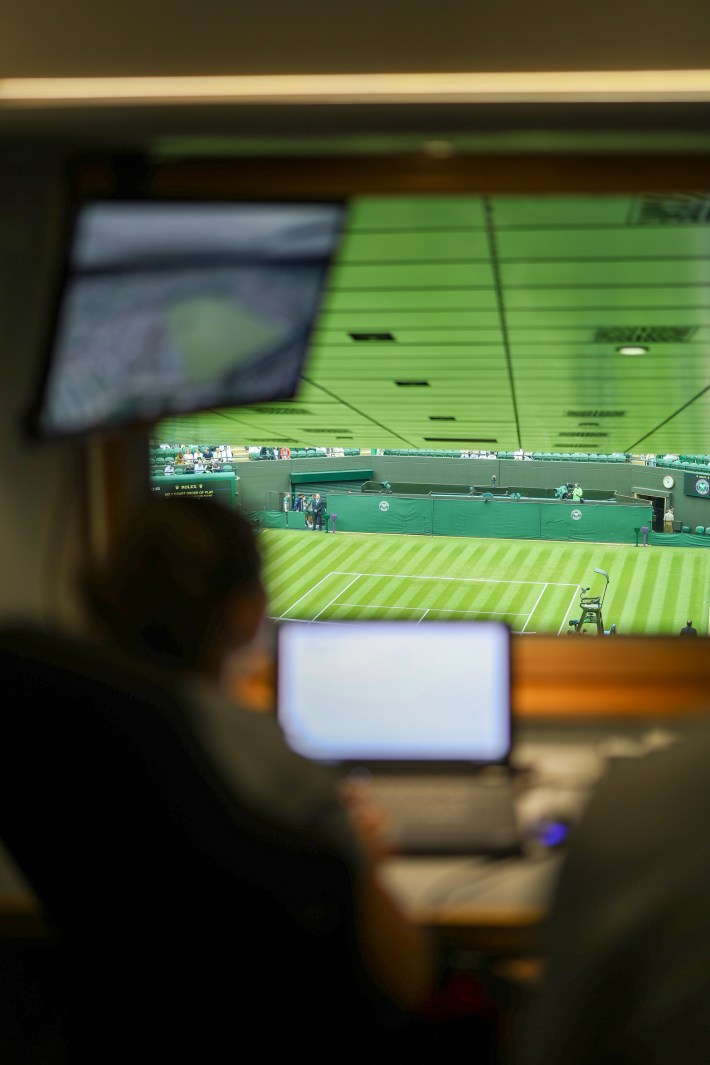
Chandani and Lewis’s favorite players? Paolini and Carlos.
Forced to choose a top ten player to not watch? Zverev.
Tomorrow, they’ll have a chat during their morning briefing with that Henry Patten, the 2024 Wimbledon Doubles champ about his time tracking matches himself and his own path through this wild tennis world.