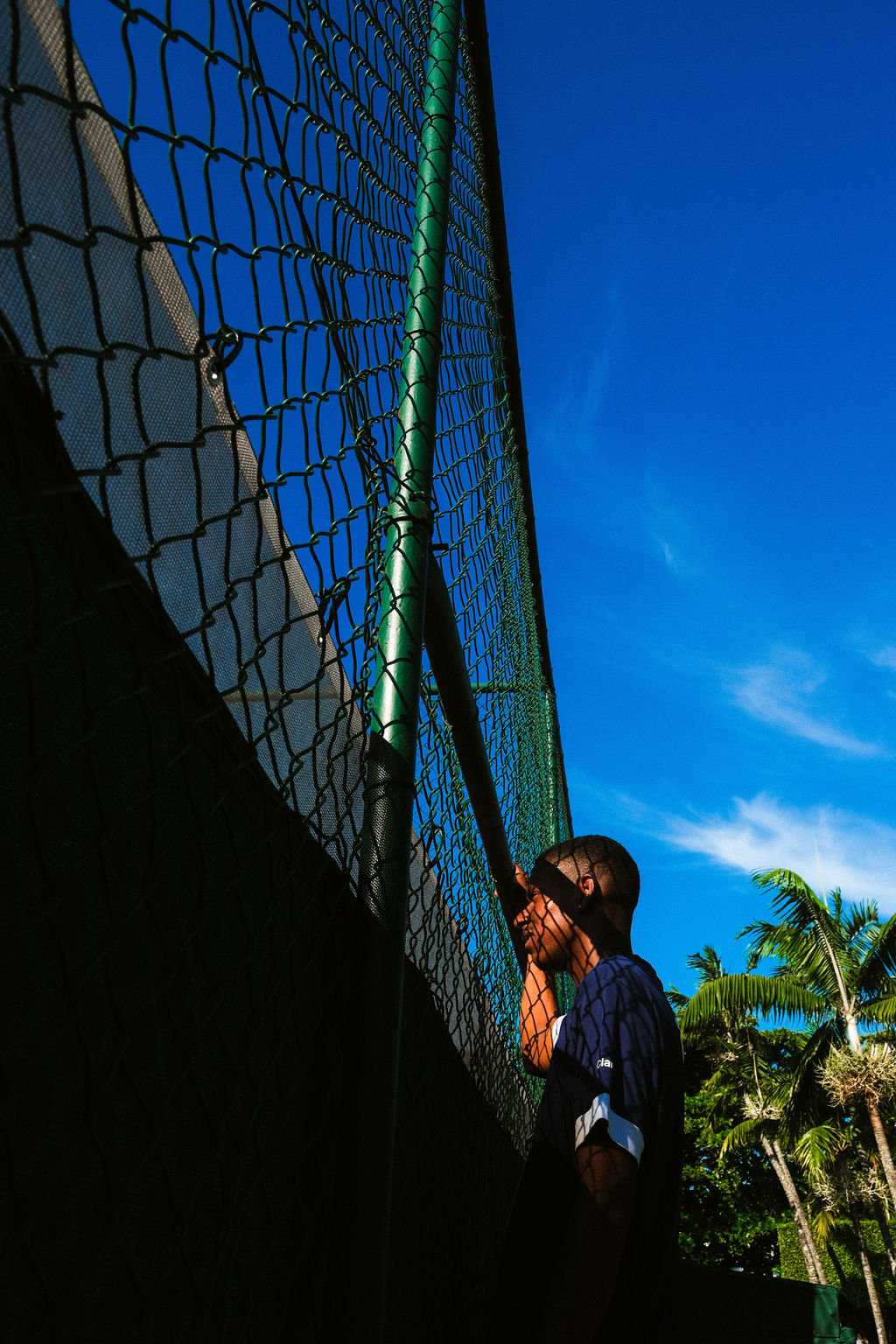
Rio de Janeiro was introduced to a new official term on February 17: the unprecedented classification of Level 4 Heat. For the first time ever, an alert was issued to the population, warning of three days of temperatures fluctuating between 104 and 111 degrees. The announcement coincided with the opening of the Rio Open ATP 500, which experienced its hottest opening round since Rafael Nadal first set foot on its clay courts.
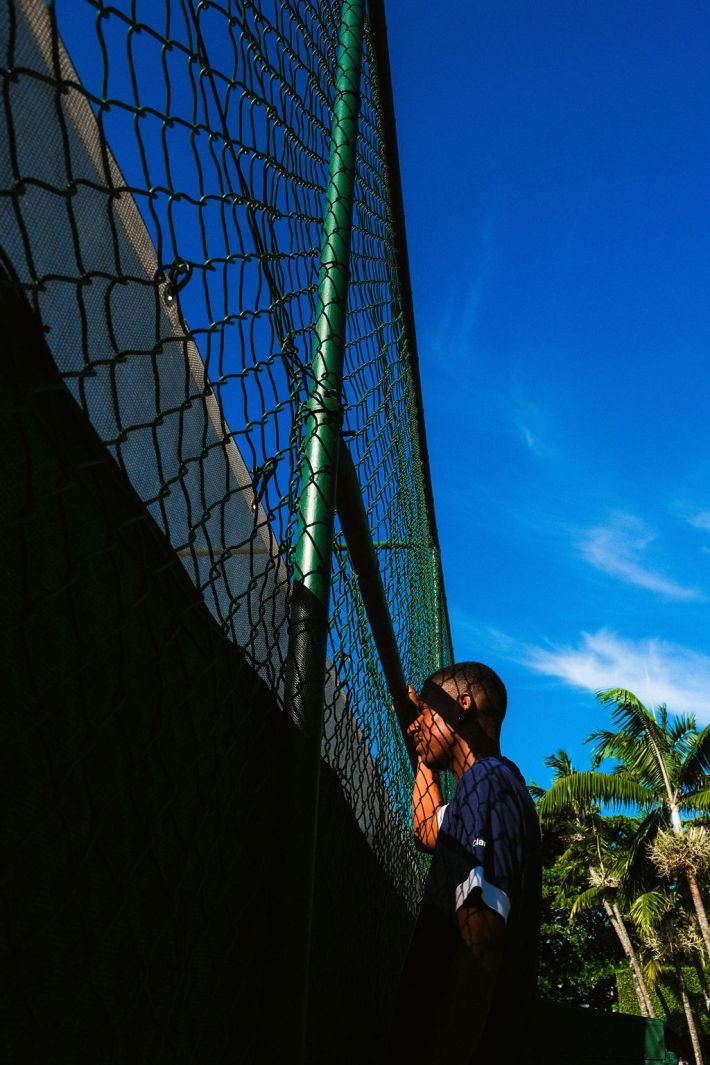
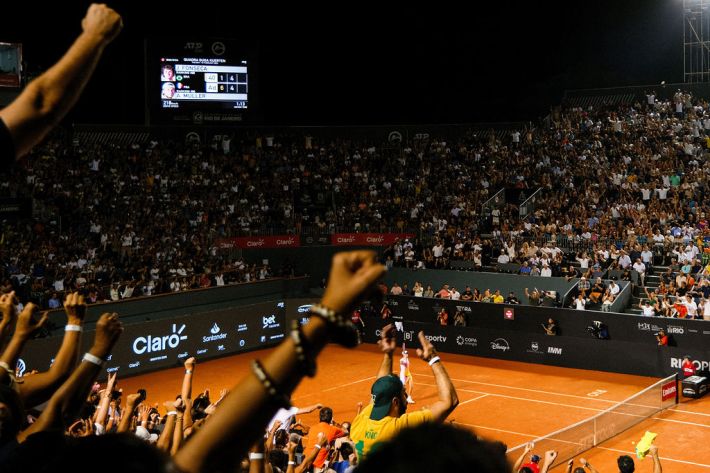
Anyone attending this year’s tournament could hardly escape the heat—or the scalpers, eager to buy extra tickets. Some were charging as much as $525—nearly 15 times the original price. “It’s not a statistic we like to talk about, but it definitely shows that the Brazilian public placed a high value on our 2025 edition,” said Luiz Carvalho, the tournament director.
Facing the main gate of the Jockey Club Brasileiro, home to the Rio Open, is a large poster of João Fonseca. Born and raised in that part of Rio, he is hailed as Brazil’s biggest tennis prospect since Gustavo Kuerten, the three-time Roland Garros champion. The 18-year-old Fonseca returned to Brazil last week as the Argentina Open champion, the highest-ranked local player—sitting at No. 68—and the reason for the uptick in interest.
Brazil’s history with tennis is modest compared to Argentina and its factory of champions. There is immense pride in the achievements of Kuerten, Maria Esther Bueno (1939-2018), a three-time Wimbledon champion, and, more recently, Bia Haddad Maia, who currently ranks No. 16 in the WTA. But tennis has never been widely practiced in this country of 206 million people; no Brazilian has ever advanced past the quarterfinals of the Rio Open singles draw.
The Fonseca effect, however, is gaining momentum. It’s another example of Brazilian soft power: a population that passionately embraces any fellow countryperson with chances to win on the world stage by spreading the topic furiously in social media.
So while Fonseca trained, hundreds of fans watched from afar, a scene reminiscent of Nadal in 2014 and Alcaraz when he defended his 2023 title. Under the watchful eye of his mother (former volleyball player Roberta Fonseca), the young star moved around with the help of five security guards.
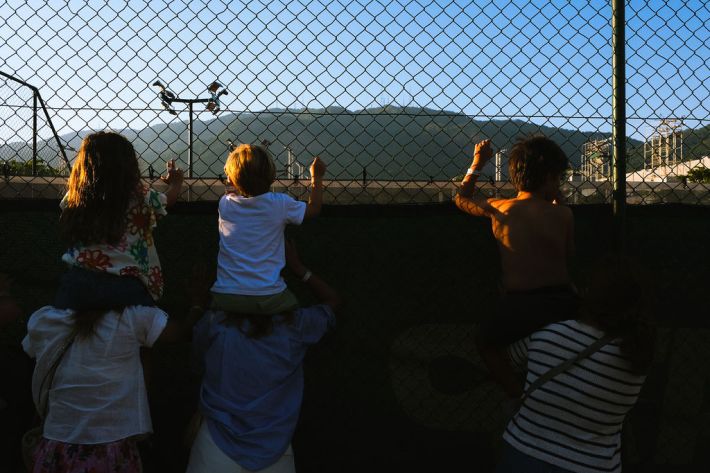
“This has been a completely different tournament this year,” said Luiz Carvalho, who has directed the Rio Open since it began in 2014. “The number of celebrities asking me for tickets—actresses, businesspeople. The most impressive thing is the number of non-sponsoring brands doing activations to ride this wave.” One of them, of course, is On, which sponsors Fonseca.
Not On, and definitely non-sponsoring, is enterprising visitor Diego Torres of Caruaru, a city 33 hours by car from Rio. Torres wore a T-shirt similar to the purple and black On version João Fonseca wore when he won the Next Gen ATP Finals in Jeddah last year. In his backpack, he carried 90 more, selling them for about $35 each. Torres had a designer knock off Fonseca’s shirts, ordered 100 pieces, and planned to cover his trip expenses—against his family’s wishes. "I felt I could do it, since nobody finds those tees anywhere," he said.
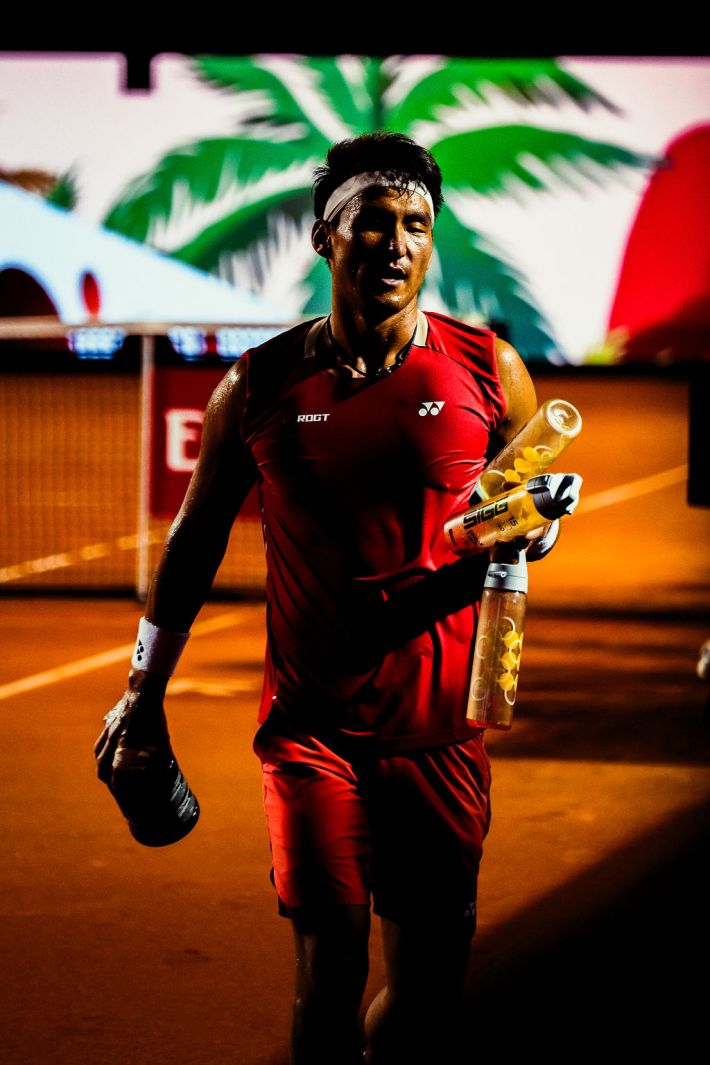
With this year’s final scheduled for one week before Carnival, the Rio Open couldn’t count on the charm of a Sambadrome visit, which has previously dazzled the likes of Nadal and David Ferrer. Other tactics help keep the tournament in the players’ good graces: soccer matches at the Maracanã stadium, and lessons in “altinha,” a game where players form a circle and pass a soccer ball around without letting it touch the ground.
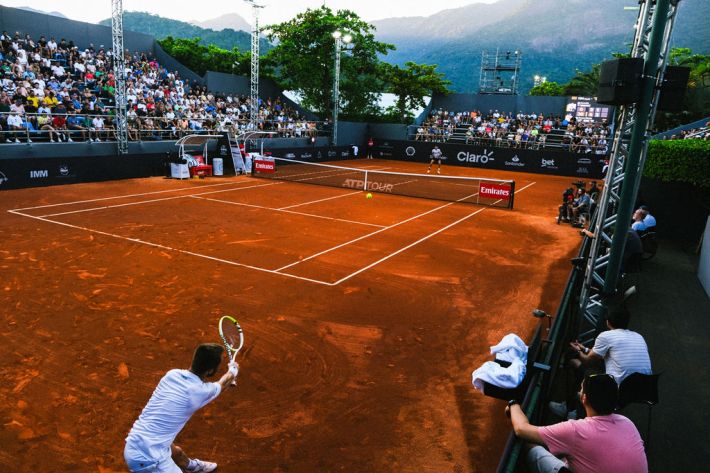
Tournament officials have also stopped trying to dampen the soccer-style enthusiasm of the mostly-local crowd. “In the early tournaments, we displayed messages on the big screen reminding fans to stay silent, not boo serves, and follow certain tennis etiquette,” said Carvalho. “I’m all for a more intense fan interaction. I think that’s our unique touch. And the players like it—having a crowd that cheers like a soccer audience, that’s fully engaged. This isn’t Wimbledon; the informality is part of our identity."
Set between mountains and a big urban lagoon named Rodrigo de Freitas, the Jockey Club Brasileiro welcomes much of Brazil’s sports royalty during the Rio Open. On Monday, gymnast Rebeca Andrade—who defeated Simone Biles in the floor exercise competition at the Paris 2024 Olympics—was there. Also present was frequent attendee Filipe Luís, the former Brazilian national team player and current coach of CR Flamengo, the country’s most popular soccer club. Tuesday, for Fonseca’s debut, another member of Brazil’s sports elite was spotted in the stands—surfer Gabriel Medina (whose mid-air float above the waves of Tahiti became the photo of the Olympics)—alongside Luciano Huck, a variety show host, philanthropist, and hesitant pre-candidate for the Brazilian presidency in the last two elections. Medina and Huck are personal friends of global soccer star Neymar, who was also expected to attend.
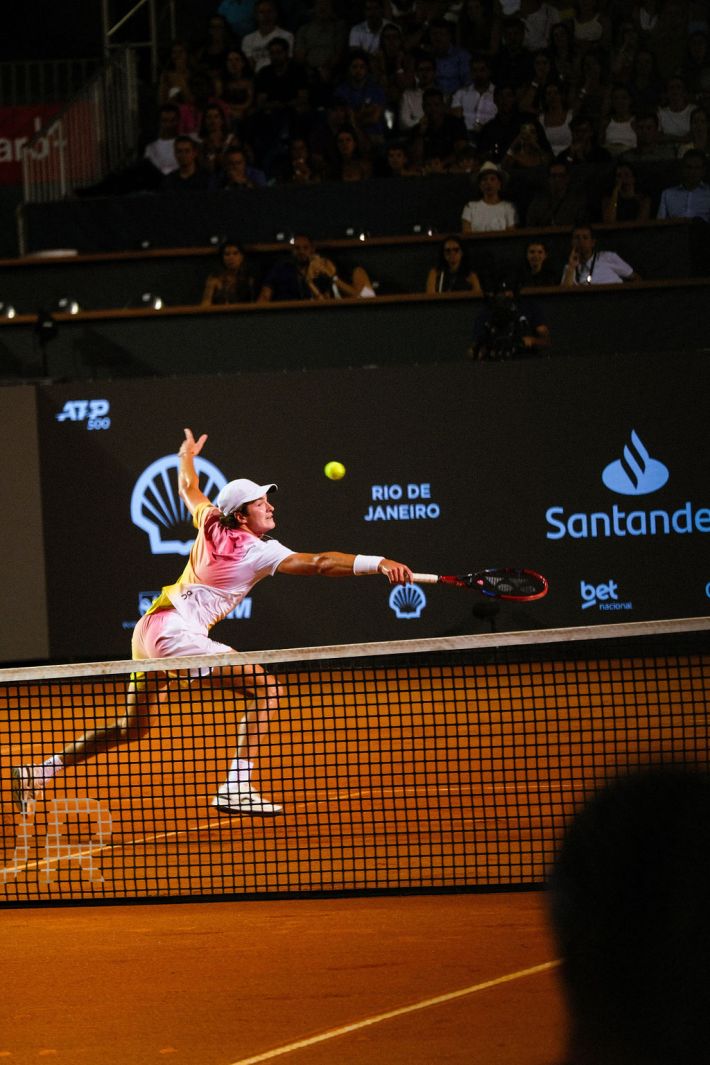
Fonseca’s debut, however, was a disappointment for the home crowd. The central court was packed with Brazilians, but he struggled to capitalize on the support and was controlled by Alexandre Muller throughout the first set. In the second, he leveled the match; the crowd was boisterous, cheering Muller’s service faults and testing everyone’s patience with chants like “Hit him in the face, João!” and “Argentine Terminator.” In the end, Muller defeated Fonseca and apologized to the tournament directors. “I think I made them lose money. I’ve never played a first-round match with such a final-like atmosphere."
"Some finals never had so many people," said Andréa Tinoco, a regular Rio Open attendee, from the steps of the most popular sector (there were no seats left). She was followed by her daughter-in-law, who came dressed in a long, white dress. "I guess her expectations were high; maybe she thought my invitation was to some VIP room."
After Tuesday night’s loss, Fonseca apologized and promised more focus and growth in future. The next day, the temperature dropped: Rio’s highest temperature for the day was 100 degrees, and the most expensive scalper tickets were down to $85.
The Rio Open final will be played this Sunday, February 23. There is an Argentine in each quarterfinal match; there are no Brazilians.
Márvio dos Anjos is a Brazilian sports writer and a frequent contributor to the Times of London.
Thiago Ribeiro is a sports photographer focused mostly in the intersection of the extraordinary people stories and the ordinary life moments.